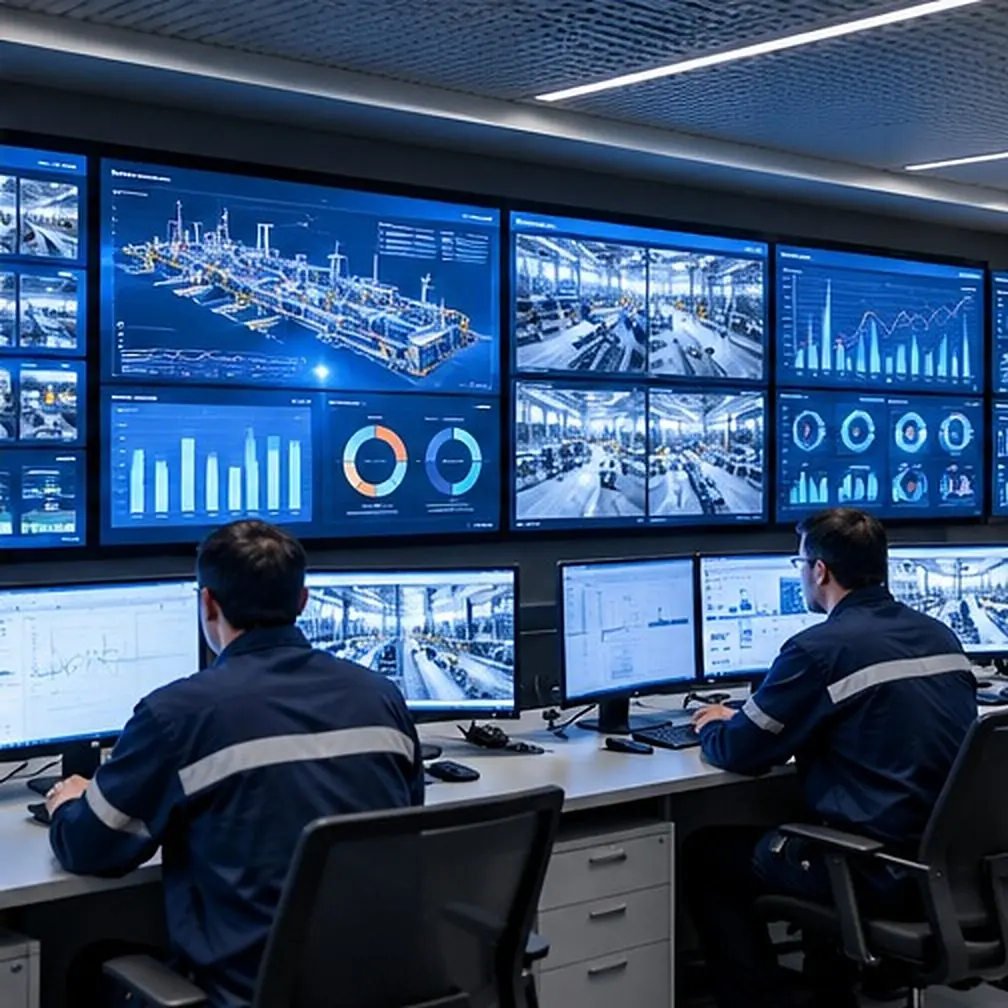
Many manufacturers we meet already have capable systems at both ends of the plant. SCADA supervises the process and keeps equipment under control. ERP plans orders, buys material and keeps the books. So the question comes up often: if we have both, why would we need MES?
Each system answers a different question
SCADA answers “what is the machine doing right now?” ERP answers “what did we plan, buy and sell?” Neither answers the question that matters most on the shop floor: “should this product move to the next step, and can we prove how it was made?”
- SCADA knows temperatures, speeds and alarms, but not which product or order they belong to.
- ERP knows the order and the bill of materials, but not which heat or lot was actually used, or which inspection failed.
- Neither enforces the approved route, the quality gate or the authorisation needed before release.
What MES adds
MES sits between the two. It receives orders from ERP, turns them into shop-floor work, follows each product through its route, links machine data and inspection results to that product, and decides what may happen next, under which conditions and with whose authority.
The value of MES is not knowing where production happened. It is governing what should happen next.
Signs the gap is costing you
- Production and quality records are rebuilt from spreadsheets after the fact.
- ERP inventory rarely matches the floor without manual adjustment.
- Customer complaints take days to trace.
- Products occasionally skip an inspection or move on while on hold.
If any of these sound familiar, the problem is rarely a lack of systems. It is a missing layer of execution governance between them.